MDF That Works: From Cost Center to Growth Engine
MDF That Works: From Cost Center to Growth Engine
by guest contributor Suraj Atreya, Global Partner Marketing Leader - Rackspace

In boardrooms across New York, London, and Singapore, a familiar conversation plays out every quarter: "How much did we spend on MDF, and what did we get for it?" Too often, the answer reveals a painful disconnect between investment and impact—millions allocated, campaigns executed, reports submitted, yet minimal movement on the metrics that matter: pipeline acceleration, customer adoption, and joint recurring revenue growth.
MDF isn’t broken. Our view of it is.
Beyond the Budget Line: MDF as Strategic Connective Tissue
For global system integrators and alliance partners, MDF represents far more than a marketing allocation. It's the connective tissue between a technology partner's global innovation narrative and a customer's regional business reality.
When AWS launches a global campaign around generative AI in healthcare, it's MDF-funded immersion days, executive roundtables, and proof-of-concept workshops that translate that vision into tangible opportunities with NHS trusts in London or health systems in Chicago.
This is where agentic AI becomes particularly powerful—while marketing campaigns broadcast broadly, AI-driven MDF strategies can identify the precise intersections where global narratives meet local market needs, optimizing dollar allocation for maximum impact.
The Anatomy of High-Performing Partner Alliance Marketing Programs
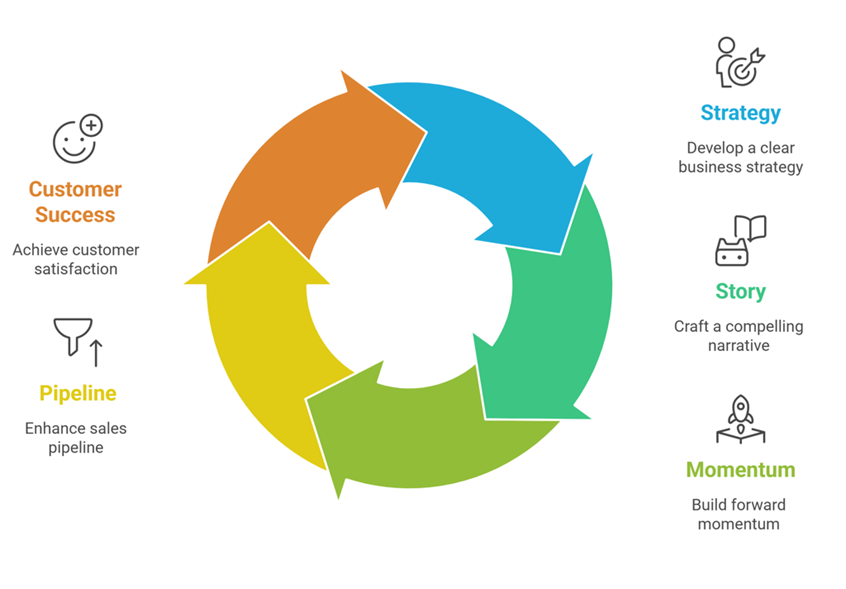
The most successful programs follow a clear progression: Strategy → Story → Momentum → Pipeline → Customer Success. This isn't a linear funnel—it's an accelerating flywheel.
Global Vision, Regional Execution: High-impact MDF bridges the strategy-execution gap by funding regional plays that bring global narratives to life. A Microsoft Azure AI workshop becomes exponentially more powerful when designed specifically for automotive manufacturers in Stuttgart facing Industry 4.0 pressures, incorporating local case studies and compliance frameworks that resonate with European decision-makers.
Alliance-Specific Playbooks: Each hyperscaler requires a fundamentally different operational approach to partner funding. AWS typically operates co-investment programs with formal proof-of-execution and claims processes. Microsoft commonly uses an earned rebate plus co-op model through Partner Center claims and accrual mechanics. Google Cloud typically uses co-funding models, increasingly aligning incentives with consumption. Program details vary by partner tier and region, so always validate with current partner program guides.
Global and regional system integrators who consistently succeed build distinct playbooks for each alliance relationship across regions—because customer adoption journeys and market dynamics vary dramatically between Dallas and Dubai, between Amsterdam and Hong Kong.
Market Development, Not Just Marketing Campaigns: The most transformative MDF programs don't merely fund campaigns—they develop entirely new market categories. They seed conversations around emerging technologies, establish thought leadership in vertical sectors, and create conditions for accelerated adoption cycles.
Solution teams leverage MDF to fund pre-sales resources who act as trusted advisors, enabling customer transformation while building qualified pipeline.
Operational Excellence: People, Process, Proof
Three disciplines separate high performers from the rest:
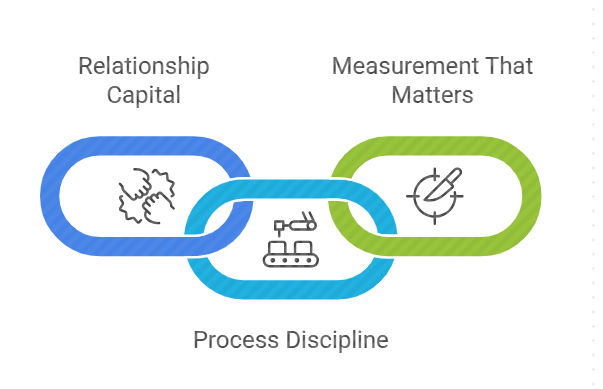
Relationship Capital: Deep connections with partner development managers and partner marketing managers who understand both global objectives and regional nuances. These relationships determine access to premium funding pools and exclusive co-marketing opportunities that separate top-tier partners from the rest.
Process Discipline: Robust systems for campaign planning, execution tracking, and ROI attribution. This isn't compliance theater—it's how you demonstrate measurable value and earn expanded investment for subsequent quarters.
Measurement That Matters: Moving beyond vanity metrics (events hosted, leads generated) to business outcomes that drive boardroom conversations: pipeline acceleration, deal velocity, customer lifetime value expansion. Many partners now combine multi-touch attribution with campaign codes and consumption metrics to tie MDF to measurable pipeline and adoption.
The gold standard: opportunities and pipeline tagged with specific campaign codes that directly tie investment to ROI. While GSIs focus primarily on service revenue growth, hyperscalers track cloud consumption metrics like Azure Consumed Revenue as an example. Successful ROI frameworks elegantly balance both perspectives, creating shared accountability that drives joint objectives across the entire partner ecosystem.
From Transactional to Transformational
The partnerships that will dominate the next decade understand that MDF is fundamentally about joint value creation. It's not "their money" or "our campaign"—it's a shared investment in customer success that generates compounding returns for all stakeholders.
When executed strategically, MDF creates a powerful virtuous cycle: the technology partner brings market credibility and cutting-edge innovation, the services partner contributes vertical expertise and customer relationships, and customers receive accelerated business transformation. The result transcends revenue—it's systematic market expansion that benefits the entire ecosystem.
In an era where every marketing dollar must justify its existence, this approach to MDF isn't just effective, it's essential. The question isn't whether to invest in ecosystem marketing, but whether you have the strategic vision and operational discipline to maximize its transformational potential.